How to Read and Interpret a Loan Agreement Before Signing

Elena Rodriguez
Certified Financial Planner · Updated October 2026

Elena Rodriguez
Certified Financial Planner · Updated October 2026
Imagine you are sitting at your kitchen table in early 2026, staring at a digital document on your tablet. You have just been approved for a 15,000 dollar loan with an interest rate that seemed incredibly competitive during the initial application phase. The excitement of securing funds for home repairs or debt consolidation is palpable, but as you scroll through the fine print, a sense of hesitation creeps in. This is the most critical moment in your borrowing journey. Most people treat the final contract as a mere formality to be clicked through, yet this document is the legally binding blueprint that dictates your financial life for years to come.
In 2026, as lending technologies become more streamlined, the complexity of these agreements can actually increase. It is not uncommon for borrowers to encounter unexpected costs because they failed to distinguish between a nominal interest rate and the actual cost of credit. For instance, while an advertised rate might look low, the total amount you pay back over the life of the loan could be significantly higher depending on the fees involved. Statistics from recent financial studies suggest that borrowers who do not thoroughly review their terms may end up paying 20% to 30% more in total interest than they initially anticipated due to overlooked clauses.
This article is designed to transform you from a passive signer into an informed negotiator. We will walk through the technical jargon, the mathematical realities of APR, and the 'gotchas' that often hide in the middle paragraphs. By the end of this guide, you will have the tools to look at any loan agreement—whether it is for 24 months or 84 months—with the eyes of an expert. We will help you decide if a specific offer truly fits your budget and whether the terms align with your long-term financial health.
One of the most frequent mistakes borrowers make is focusing solely on the 'interest rate' while ignoring the Annual Percentage Rate (APR). In 2026, lenders are required to be transparent about this distinction, but the math can still be confusing. The interest rate only tells you how much the lender charges for the principal amount, whereas the APR provides a more holistic view by including origination fees, processing costs, and other mandatory charges.
To see this in action, consider a $10,000 loan at 12% APR over 36 months. Your monthly payment might hover around $332. However, if the lender has an origination fee of 5%, you might only receive $9,500 in your bank account while still being required to pay back the full $10,000 plus interest. In this scenario, your effective cost is much higher than that 12% figure suggests. Always calculate the total sum of all payments made over the life of the loan and compare it to the actual cash you receive in hand.
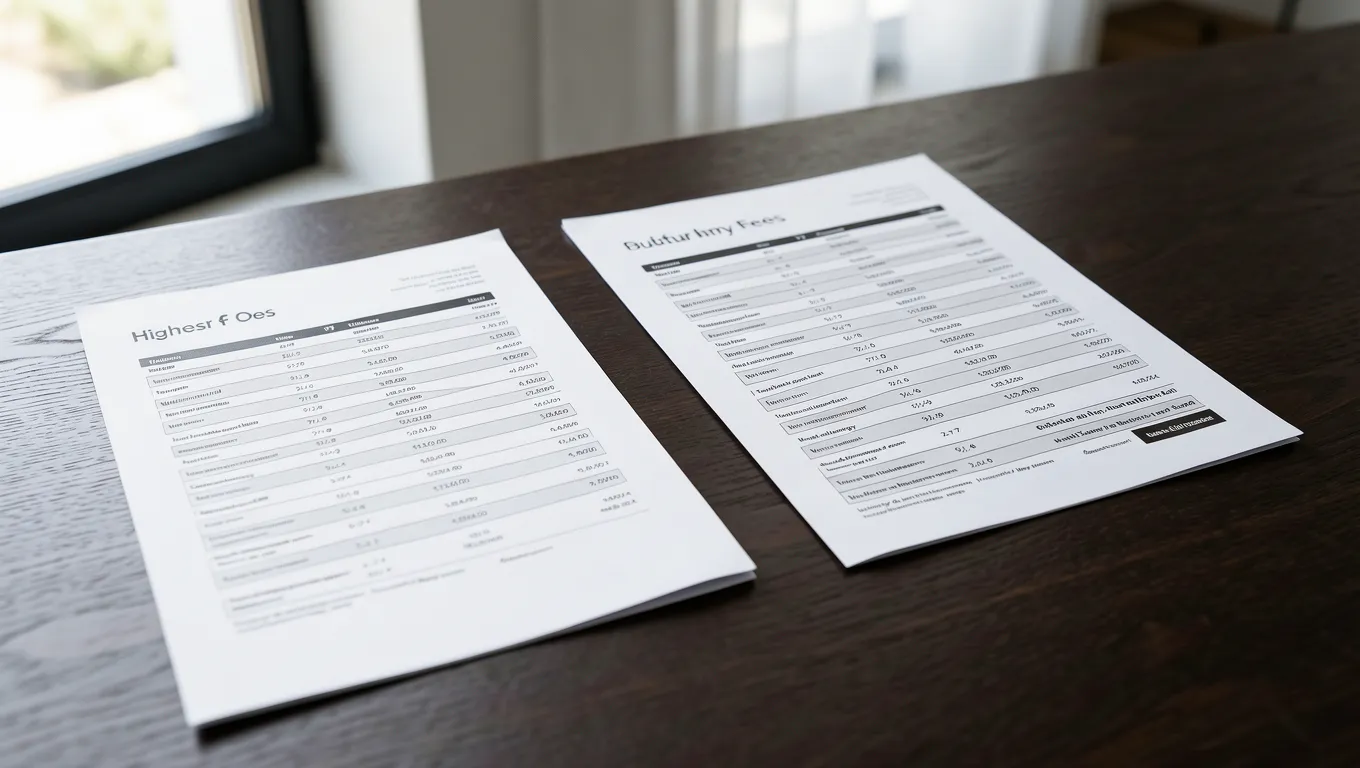
As you scroll through your agreement, look specifically for terms like 'Prepayment Penalty' or 'Early Exit Fee'. This is a clause that allows the lender to charge you a fee if you decide to pay off your loan ahead of schedule. While it might seem counterintuitive—why would a lender punish you for being responsible and paying them back early?—it is a common way for institutions to protect their projected interest income.
For example, imagine you take out a $5,000 loan at 15% APR for 48 months. You plan to pay it off in just two years once your bonus arrives. If the agreement contains a prepayment penalty that calculates a percentage of the remaining interest, you might find yourself paying hundreds of dollars extra just to be debt-free sooner. Always confirm whether your loan allows for penalty-free prepayments; this is one of the most vital protections a borrower can have in 2026.
Another trap involves origination fees that are 'rolled into' the loan balance. If you borrow $15,000 but the lender deducts a 4% fee upfront, your starting balance for interest calculations is still $15,000, even though you only ever saw $14,400 in your account. This subtle shift can add hundreds of dollars to your total debt load over several years. Always ask: 'What is the exact amount that will be deposited into my account versus the total principal I am responsible for paying?'
The rhythm of your monthly budget depends entirely on the repayment terms outlined in your contract. You need to know not just how much you owe, but exactly when it is due and what happens if life gets in the way. A single missed deadline can trigger a cascade of financial consequences that extend far beyond a simple late fee.
When reviewing this section, use this decision framework to evaluate your readiness:
The most intimidating part of any loan agreement is the section detailing what happens when you can no longer meet your obligations. You must understand 'Acceleration Clauses.' An acceleration clause gives the lender the legal right to demand immediate payment of the entire remaining balance if you violate certain terms, such as missing multiple consecutive payments or failing to maintain insurance on collateral.
This is a high-stakes scenario that often bypasses the standard monthly repayment cycle. Instead of paying $300 a month, you might suddenly find yourself owing $12,000 in full within thirty days. The Consumer Financial Protection Bureau (CFPB) provides guidelines to protect consumers from predatory practices during this phase, but knowing your rights starts with understanding these clauses before they are ever invoked.
Expert nuance: Many borrowers overlook how their credit profile affects these terms mid-loan. While your initial rate is set at the start, some agreements include 'variable risk' clauses where a significant drop in your credit score could potentially trigger higher fees or more stringent reporting requirements. Always read the section titled 'Default' or 'Events of Default' with extreme care. It is better to understand the worst-case scenario now than to be surprised by it when you are already under financial stress.
In the economic landscape of 2026, choosing between a fixed-rate and a variable-rate loan is one of your most significant strategic decisions. A fixed-rate loan offers predictability; your monthly payment remains identical from the first month to the last. This is ideal for those on a strict budget who want to avoid market volatility.
Conversely, a variable-rate loan may start with a lower interest rate than its fixed counterpart, but that rate can fluctuate based on indices like the Federal Reserve's base rates. Let us compare two scenarios:
Before you provide your digital signature or ink to a document, you need a systematic way to verify that everything is correct. Do not rely on the salesperson's verbal promises; if it is not in the written contract, it does not exist in the eyes of the law.
Follow this concrete checklist for every loan agreement you encounter:
If this option fits your situation, it's also worth comparing bad credit loans and personal loans for bad credit.