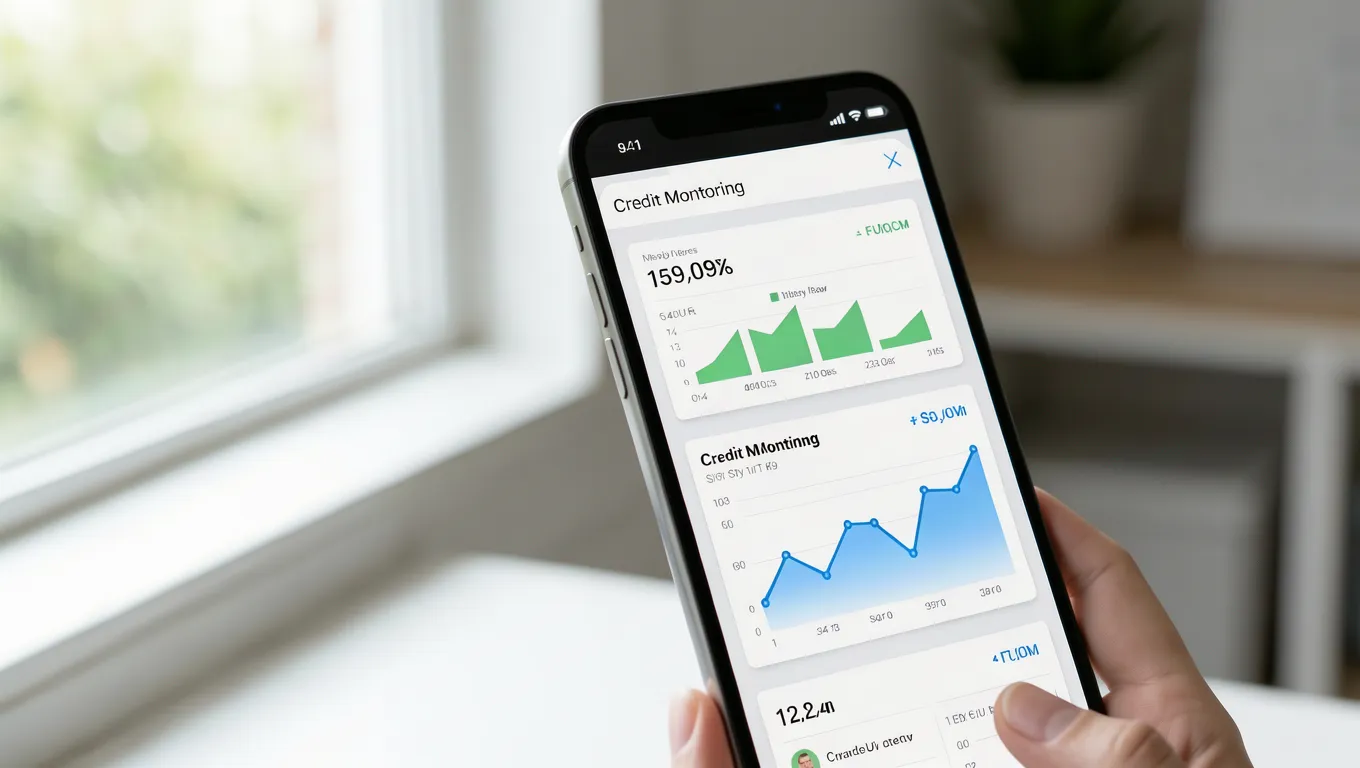
Finding a way forward when your score isn't perfect can feel daunting. We help you connect with lenders that specialize in subprime credit solutions for 2026.
No hard credit pull · Takes 2 minutes
Won't impact your credit score
Provide basic details about your financial situation and the amount you need to see what lenders may offer.
Review multiple offers from various lenders to find the terms that best fit your current budget.
Once you choose an offer you like, complete the final application with that specific lender's platform.
Navigating the financial landscape when your credit score has taken a hit requires a strategic approach to borrowing. Many people assume that a low score automatically disqualifies them from obtaining any form of unsecured financing, but in 2026, the lending market is far more nuanced than it once was. While traditional major banks often prioritize high FICO scores, subprime lenders may provide options for those with scores in the 380 to 579 range.
It is crucial to understand that these loans are specifically designed for individuals who might not meet the stringent criteria of prime lending institutions. According to data from major bureaus like Experian, credit history is just one piece of the puzzle. Lenders in the subprime space often look at your debt-to-income ratio and your consistent history of managing utility or rent payments. This means that even if you have a history of late payments, your current income stability could play a major role in your ability to secure an installment loan.
These products are typically structured as fixed-rate installment loans, meaning your monthly payment remains the same throughout the life of the loan. This predictability is vital when you are working toward financial recovery. However, it is important to note that because the risk associated with subprime borrowing is higher, the APR range can be significantly wider than prime loans, often spanning from 18% to 36% or even higher depending on your specific profile and the lender's internal risk assessment.
Qualifying for a loan with less-than-ideal credit involves more than just your numerical score. In 2026, many lenders utilize alternative data to assess risk, looking closely at your employment stability and monthly cash flow. While a low score might be a hurdle, maintaining a healthy debt-to-income ratio can significantly improve your chances of approval from certain subprime specialists.
Lenders will typically require proof of identity and income to verify that you have the capacity to repay the debt. This might include recent pay stubs, tax returns, or bank statements. It is also important to be aware of credit utilization; if your current revolving credit lines are nearly maxed out, it may impact how much a lender is willing to extend to you in a new installment product.
It is vital to remember that approval is never guaranteed and depends entirely on the specific lender's criteria. Some lenders may require a co-signer with established credit to mitigate their risk, while others might offer higher origination fees in exchange for more flexible approval requirements. Always review the fine print of any agreement before committing to a new financial obligation.
| Lender Type | Typical APR | Max Amount | Funding Speed | Approval Likelihood |
|---|---|---|---|---|
| Traditional Banks | 6% - 24% | $50,000+ | 1-7 Days | Low (High Score Required) |
| Credit Unions | 8% - 28% | $25,000 | 3-5 Days | Moderate (Membership Needed) |
| Online Subprime Lenders | 18% - 36%+ | $10,000 | Same Day/24 Hours | High (Focus on Income) |
| Specialty Finance Co. | 25% - 36%+ | $5,000 | Instant to 48 Hours | Very High (High Risk) |
When considering a loan with less-than-perfect credit, the most critical factor is often the Annual Percentage Rate (APR). Unlike a simple interest rate, the APR includes both the interest and any origination fees or other costs associated with getting the loan. This provides a more accurate picture of what you will actually pay over the life of the debt. For many subprime borrowers in 2026, understanding this number is the difference between financial stability and falling into deeper debt.
Another component to watch for is the loan term. While longer terms might result in lower monthly payments, they often lead to much higher total interest costs over time. According to guidance from the CFPB, it is essential to compare the total cost of credit across different lenders rather than just looking at the monthly payment amount. A loan that seems affordable today could become a significant burden if the term is unnecessarily extended.
Be wary of any lender that cannot clearly explain their fee structure upfront. Most reputable lenders will provide a clear breakdown of all costs, including any potential prepayment penalties. If you find yourself in a position where your credit score improves during the life of your loan, being able to pay off the balance early without penalty can save you thousands of dollars in interest.
The modern lending landscape has shifted toward digital-first experiences, making it easier than ever to shop for loans without impacting your score. In 2026, many platforms allow you to check for a potential match using a soft credit pull. This means you can see which lenders may be interested in working with you before you commit to a formal application that involves a hard inquiry.
To maximize your chances of success, preparation is key. Before starting the process, organize your financial documents, including proof of identity and income verification. Having these ready can speed up the underwriting process significantly. It is also helpful to have a clear understanding of exactly how much you need; borrowing more than necessary just because it is available can lead to unnecessary interest expenses.
Once you receive offers, do not feel rushed into selecting the first one that appears. Compare the total cost of credit and ensure the lender's reputation is solid. While subprime lenders may have different requirements than prime banks, they are still subject to strict consumer protection laws designed to ensure transparency in how interest rates and fees are disclosed.
While personal loans for bad credit can be a vital tool for managing unexpected expenses, they do come with inherent risks that borrowers must navigate carefully. The primary risk is the cost of capital; because subprime lenders take on higher risk by lending to those with lower scores, they charge higher interest rates to compensate. If you are using these funds to cover ongoing living expenses rather than a one-time emergency, you may find yourself in a cycle of borrowing that is difficult to break.
One common pitfall is the 'minimum payment trap,' where borrowers only pay enough to satisfy the monthly requirement without making any progress on the principal. This can lead to paying back significantly more than the original amount borrowed. To avoid this, it is often beneficial to aim for extra payments toward the principal whenever your budget allows, even if they are small amounts.
Another risk involves the impact of additional debt on your overall financial health. Taking out a new loan increases your total debt obligation. If you use a personal loan to consolidate credit card debt, but then continue to charge items to those cards, you will end up with both the new loan and the old credit card balances. This 'double-dipping' is a leading cause of severe financial distress for many consumers.
Check your reports from Equifax, Experian, and TransUnion for errors. Disputing incorrect information can provide an immediate boost to your score.
Try to pay down existing credit card balances to below 30% of their limits before applying for a new loan.
Ensure you have documentation for all steady income, including side hustles or government benefits, to prove repayment ability.
Limit the number of hard credit inquiries you make in a short period. This shows lenders that you are not desperate for cash.
Our system quickly connects you with lenders that specialize in your specific credit profile.
We believe in transparency; there are no costs to use our matching service for 2026.
Your sensitive financial information is protected by industry-leading security protocols.
We work with a wide variety of lenders to increase your chances of finding an acceptable offer.
Adjust the sliders to see an instant estimate. Actual rates depend on your credit profile.
* Estimate only. Actual rate and terms depend on lender approval.
Estimated Monthly Payment
$332.14
per month for 36 months
No impact on your credit score